A complete CAT C15 rebuild parts list starts with the engine serial number and the arrangement number, not with a shopping cart. These two identifiers determine which pistons, camshafts, injectors, and gaskets actually fit your engine, because Caterpillar built the C15 in many configurations across industrial, construction, and on-highway applications. Identify the engine first, inspect the wear items during teardown, build the list group by group, and verify every part number in writing before you order. This guide walks through each step and flags the ordering mistakes that cost rebuilders the most time and money.
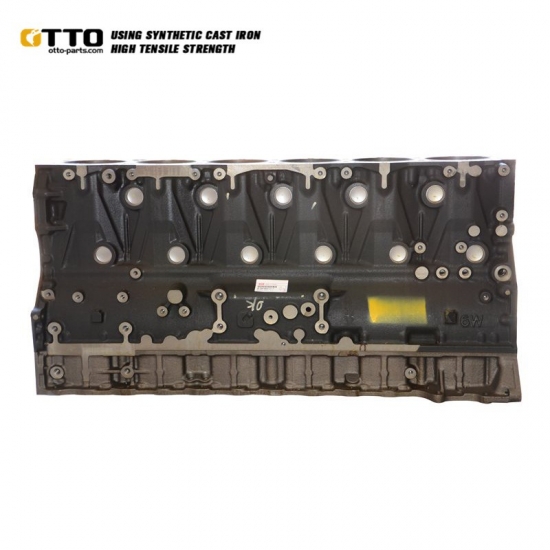
CAT C15 engine cylinder block, OTTO part numbers 267-4631 / 267-4632 series
Two numbers control every parts decision on a C15. The engine serial number (ESN) identifies your specific engine. The arrangement number (AN) describes the exact component breakdown Caterpillar built into it — the piston group, cylinder head group, fuel system group, and every other assembly. Order against the wrong number and you can receive parts that look correct on the bench but will not fit your engine.
The engine data plate carries both numbers. On most C15 engines the plate sits on the left side of the block near the valve cover, and the serial number is also stamped directly into the block on the right side toward the rear — commonly behind the air compressor, roughly below the exhaust port of the fifth cylinder. On some builds the number appears on the valve cover instead. Placement varies by production year, so if the stamp is hard to find, clean the area and check your owner's manual for the exact location on your serial range.

CAT diesel engine assembly — the data plate on engines of this family carries the model, ESN, and arrangement number
The arrangement number is a numeric code with a hyphen, such as 240-4187 on many C15 ACERT on-highway builds or 254-3835 on industrial units. A single C15 model can carry several arrangement numbers depending on how the engine was configured at the factory, so always pair the AN with the ESN when you research parts. Quoting only the model invites the wrong pistons, injectors, or turbochargers.
The three-character ESN prefix tells you which C15 variant you own. Common examples include:
| Serial Number Prefix | Engine Model / Application |
|---|---|
| JAS | C15 industrial engine (mechanical-style builds, e.g. 400 hp @ 2100 rpm ratings) |
| BXS | C15 ACERT on-highway truck engine |
| JRE | C15 ACERT industrial / oilfield engine |
Confirm your prefix before ordering. The OTTO parts team cross-checks every prefix against the correct component group, which keeps your rebuild on schedule.
Tear the engine down with a checklist in hand and inspect these four areas before you order a single part. What you find here decides whether you need an in-frame kit or a full overhaul, and which components go on the list.
Many of the parts you will need are covered in the OTTO engine parts catalog, which is organized by engine model and part number so you can match against your inspection results.
The cylinder head carries the most expensive failure modes on a C15. Inspect the valve train closely and record every defect before deciding between repair and replacement:
| Issue | Affected C15 Variant | Failure Mechanism / Symptoms |
|---|---|---|
| Intake valve actuators (IVA) sticking | Emissions-era C15 ACERT (sequential / compound turbo) | Actuator weakens and sticks; causes audible engine miss and excessive white smoke; triggers low/high current fault codes |
| Rocker arm failure | Early single-turbo C15 | Thinly cast rocker arms crack between the camshaft and valve bridge, throwing off valve timing and producing an audible tick |
| Failed rocker arm shaft studs | C15 ACERT | Shaft wears into the head casting and nuts loosen; leads to broken Jake brake / IVA housings, sheared shafts, and head damage |
| Cracked cylinder head | C15 (all) | Often caused by incorrect liner protrusion or overheating; cracks reaching the valve seat regions can be catastrophic |
Measure every liner, piston, and ring against the wear limits published for your engine serial in the Caterpillar service manual — limits differ between C15 variants and between standard and rebuild-size configurations, so a generic number from the internet is not a safe basis for a decision. Use this checklist to structure the inspection:
| Component | What to Measure | Decision Rule |
|---|---|---|
| Cylinder liner bore | Diameter in two directions at several heights with a dial bore gauge | Replace the liner once wear reaches the manual limit for your serial |
| Piston ring end gap | Gap with the ring squared in the liner | Replace the ring set when the gap exceeds the manual limit |
| Piston ring side clearance | Clearance between ring and groove with feeler gauges | Replace rings (or piston, if the groove is worn) when clearance exceeds spec |
| Piston pin and bushing | Pin outside diameter and pin-to-bushing clearance | Replace the pin or bushing when clearance exceeds the manual limit |
| Liner protrusion | Height of the liner flange above the block deck | Correct before head installation — improper protrusion is a known cause of head cracking |
Check the main and rod bearings for scoring, copper show-through, and uneven wear patterns. Measure each crankshaft journal for diameter and out-of-round with a micrometer, and inspect the crankshaft for cracks with a magnetic particle test. Any journal outside specification calls for grinding to the next undersize or crankshaft replacement — and the matching undersize bearings must go on the order at the same time.
Pressure-test the oil cooler for internal leaks and inspect the oil pump gears and housing for scoring. A weak pump or a leaking cooler contaminates the oil system and shortens the life of an otherwise sound rebuild, so both belong on the replacement list when the inspection gives any doubt. The OTTO team can confirm the correct replacement group once you supply your serial number.
A complete C15 rebuild parts list covers four groups: the cylinder group, the bottom end, the gasket and seal kits, and the fuel, oil, and cooling components. Build the list group by group — this keeps the order organized and reduces the chance of a missing part stopping the job halfway through.
The cylinder group includes the cylinder block and head assembly, valves, valve springs, valve seats, injector sleeves, the camshaft and rocker arms, and the liners, pistons, and rings for each cylinder. Major castings such as the C15 cylinder block (267-4631, 267-4632 and related numbers) are supplied against the engine serial number, so quote the block only after you have the ESN confirmed.
Order the cylinder head as a complete loaded assembly when the casting shows cracks or severe wear. A bare head requires you to transfer or replace every valve train component; a loaded head arrives with valves, springs, and injector cups installed, which saves assembly time and removes the risk of mismatched parts.
Pistons come in several designs across C15 variants, and the piston group must match your arrangement number — a piston designed for one combustion strategy will not perform correctly in another. Liner kits typically include the liner, O-rings, and seal rings; some kits add the piston and rings as a matched set, which guarantees correct clearances out of the box.
The bottom end carries the crankshaft, main bearings, connecting rod bearings, connecting rods, and the oil pump. Main and rod bearings almost always need replacement during a rebuild. Connecting rod bolts are torque-to-yield fasteners on many C15 builds — replace them rather than reuse them, because a stretched bolt loses clamping force and can fail under load.
Follow the torque sequence and values in the Caterpillar service manual for your specific serial number. Torque specifications on this engine vary by configuration and fastener group, so a quoted number from memory or a forum is not a safe reference — the manual for your serial is the only authority worth using on assembly day.
Gasket and seal kits complete the rebuild. A full kit covers the cylinder head gasket, oil pan gasket, valve cover gaskets, front and rear crankshaft seals, and the seals for the oil cooler and water pump. Kit contents vary between C15 variants — some include exhaust manifold and turbocharger mounting gaskets, others leave those out — so check the contents list before you order and add missing items separately. Replace every seal you can reach while the engine is apart; a cheap seal that fails after assembly costs far more in labor than the part itself.
The fuel system includes the injectors, the fuel transfer pump, and the fuel filter base. Injectors wear with hours and directly affect power, fuel economy, and exhaust smoke, so most full rebuilds include a new or remanufactured set — for example the 374-0750 fuel injector for the C15 and C18 engines used in 365C and 374D excavators. Confirm the injector part number against your arrangement number, because ACERT and non-ACERT builds take different units.
The oil system covers the oil pump, oil cooler, oil filter base, and pickup tube. Pressure-test the cooler and replace it if it leaks — a leaking cooler lets coolant into the oil and damages your new bearings. The cooling system includes the water pump, thermostat, and coolant lines; replace the water pump (224-3239 fits the C15 in 365C / 374D / 374F machines) as a matter of course, because the labor to reach it later is significant.
Use this table as a quick checklist when you build the order:
| Component Group | Key Parts | Inspection Priority |
|---|---|---|
| Cylinder group | Cylinder head, valves, camshaft, rocker arms, liners, pistons, rings | High — check for cracks and wear limits |
| Bottom end | Crankshaft, main bearings, rod bearings, connecting rods, oil pump | High — measure journals, replace torque-to-yield bolts |
| Gasket and seal kits | Head gasket, pan gasket, crankshaft seals, O-rings | Medium — confirm kit contents in writing |
| Fuel system | Injectors, transfer pump, filter base | Medium — match injector number to the arrangement |
| Oil system | Oil cooler, oil pump, filter base, pickup tube | High — pressure-test the cooler |
| Cooling system | Water pump, thermostat, coolant lines | Medium — replace the pump during the rebuild |
The OTTO parts team verifies every component group against your serial and arrangement numbers before shipment, which catches mismatched parts before they leave the warehouse.
Sourcing parts for a C15 rebuild rewards preparation. Gather the right information before you contact a supplier, and confirm every detail in writing before you pay. The four steps below close the gaps where ordering errors commonly slip through.
Give your supplier a complete information package rather than a one-line request:
| Detail to Provide | Purpose / Notes |
|---|---|
| Machine model (e.g. 365C, 374D, 374F, 385C, D8T) | Identifies the base machine the engine powers |
| Full machine PIN or serial number | Core identifier for fitment; the last characters matter most |
| Cat engine serial number (prefix + number) | Required for all engine-related parts |
| Arrangement number from the data plate | Defines the exact factory configuration |
| Part number from the old part, parts book, or invoice | Original part reference, transcribed exactly |
| Clear photos of the old part from several angles | Visual confirmation of identity and installed position |
| Photo of the machine identification plate | Validates machine identity |
| Photo of the engine data plate | Validates engine identity and the arrangement |
| Application, working environment, and year | Context for correct sourcing |
| Quantity, shipping country, retail vs. wholesale | Order logistics and quotation terms |
Serial number discipline matters across your whole fleet. Caterpillar, Komatsu, Volvo, Hitachi, Perkins, Cummins, Kubota, and Yanmar equipment may all require model numbers, serial numbers, engine numbers, arrangement numbers, or photos before a supplier can confirm the correct replacement. Make the serial check a habit before you order, not after the part arrives.
The same C15 block serves many applications, and each carries its own horsepower rating and duty cycle. A highway truck engine, a marine engine, a generator set, and an excavator or dozer can share the model name while using different pistons, injectors, turbochargers, and cooling packages. State what the engine powers, its rated horsepower from the data plate, and the working environment — this context guides piston and injector selection and prevents a mismatch between the parts and the duty the engine actually sees.
The serial number alone cannot prove the current internal condition of the engine, its machining history, or the status of parts replaced in earlier repairs — an old component may have been changed or supplied under a superseded reference. Transcribe every old part number exactly, preserving spaces, hyphens, and uncertain characters: a single wrong digit redirects the entire search. Send wide shots and close-ups from several angles of plates, stampings, and old component markings so the supplier can confirm both identity and installed position. Old numbers, photographs, and installed positions together let the supplier verify the piston, ring, and liner group, the bearings, and the gaskets as a matched set against your confirmed engine context — the basis for a traceable quotation that states what is included, what is excluded, and what remains open.
Kit contents vary between suppliers and between C15 variants, and two kits with the same name can hold very different parts. Work through verification in sequence: confirm the engine model and serial information, provide it to the supplier in writing, send old part numbers and photos, confirm standard or repair-size requirements, request a written list of included parts, and compare quotes on the same scope, quantity, and quality level. For each major group, ask:
| Check Item | Questions to Ask |
|---|---|
| Cylinder group | Are pistons, rings, rods, links, and liners included, and in what quantity? |
| Bearings | Are they standard or repair size? |
| Seals and gaskets | Are all required seals and gaskets included? |
| Fasteners | Are the fastener packs included? |
| Support systems | Are the oil pump, water pump, and cooler components included? |
| Parts verification | What engine serial data and old part numbers were used to confirm fitment? |
A lower price often reflects a smaller scope — a missing gasket set or fastener pack adds cost and delay later. The OTTO parts team itemizes every kit before shipment, with a written contents list, a confirmation of bearing sizes, and a record of the serial data used for verification.
One decision shapes the whole order: the in-frame kit or the complete overhaul kit. Each fits a different level of engine work, and your inspection measurements — not the price difference — should make the call.
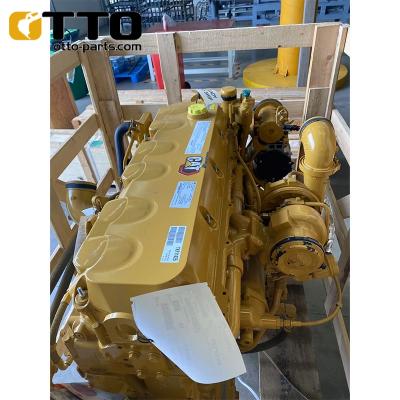
Complete CAT diesel engine assembly — full assemblies are the alternative when rebuildable cores are beyond economic repair
An in-frame kit handles the work you can complete with the engine still in the chassis. It focuses on the cylinder group and the components that wear first. A typical CAT C15 in-frame kit includes single-piece 18:1 compression pistons, matched liners, piston oilers, and the full set of gaskets and O-rings. This suits an engine with a sound bottom end: the crankshaft, rods, and bearings stay in place while you refresh the top end, giving a faster job with less labor and a lower parts cost.
A complete overhaul kit goes further and adds main bearings, rod bearings, and the full seal and gasket set for a full teardown. Choose it when inspection reveals bearing wear, crankshaft damage, or a bottom end that needs machine work — or when you want to reset the full service life of the engine in one pass. Measure the bearings and journals first: if they fall within specification, the in-frame kit covers the rebuild; if they do not, step up to the complete kit. Where the engine is beyond economic rebuild, OTTO also supplies complete CAT diesel engine assemblies as a replacement route.
You have two paths for CAT C15 rebuild parts, and each fits a different priority. OEM parts come through Caterpillar dealers with guaranteed fit for your serial and arrangement number, full documentation, and factory warranty support. This path suits emissions-era C15 ACERT engines in particular, because twin-turbo and emissions-specific components have fewer aftermarket equivalents and some ACERT parts are only available through the dealer network.
Quality aftermarket parts typically cost well below dealer prices, and the large C15 population in the field keeps availability strong for most common components — liners, pistons, bearings, gaskets, and popular fuel system parts. The practical approach many fleet owners take is mixed: aftermarket for standard wear items on non-emissions builds, OEM where emissions hardware or documentation is critical. Price lists change with the market, so treat any published cost table as a planning hint only and confirm current pricing with your supplier against the actual part numbers. The OTTO team will quote both options for the same parts list so you can compare like for like.
A correct order starts with verified numbers. OTTO builds every C15 rebuild parts quote on your machine serial number and your existing part numbers, following a structured process:
Send your machine serial number and existing part numbers to the OTTO parts team for a tailored quotation, and keep the confirmation with your machine records.
A complete overhaul kit covers the full teardown: the cylinder group (pistons, rings, liners, and the head gasket), main bearings, rod bearings, and the full seal and gasket set. Fastener packs and piston oilers are often included. Contents vary between suppliers and C15 variants, so request a written itemized list and confirm the bearing size — standard or repair — before you order.
Four items: the engine serial number and arrangement number; the machine model and full machine PIN; old part numbers with clear photos from several angles; and the application, horsepower rating, and quantity. This package lets the supplier verify fitment against the factory build record — a model-only request invites the wrong parts.
Yes, when inspection shows the rest of the engine within specification. Measure the liners, bearings, and journals first. A sound bottom end supports a targeted repair, while a worn bottom end calls for a fuller parts list — a fresh top end running over worn bearings shortens the life of both. Let the measurements drive the decision, not the budget alone.
A typical in-frame rebuild takes roughly three to five days of shop time; a complete overhaul runs longer. Parts availability drives the schedule, so order the verified kit before teardown begins.
Reuse the head only when it passes a crack test and a flatness check. Cracked valve seat areas or warped decks demand replacement. OTTO confirms the correct head group for your serial number.
Measure each journal with a micrometer and compare the result against the factory specification for your serial number. Under-size journals need matching undersize bearings — state standard or repair size on the order to prevent a fitment error.
Tel : +86-15302269990
WhatsApp : +8615302269990
WhatsApp : +8619125112809
E-mail : service@gzotto.com
E-mail : sales02@gzotto.com
Address : No.1108 & 1109 Tower 2, Yuzhu haisi innovation Center, Huangpu District, Guangzhou, China
Friendly Links :
hitachi-isuzu© 2026 OTTO EXCAVATOR PARTS CO., LIMITED All Rights Reserved.

Hi! Click one of our members below to chat on